Blog
Choosing Non Marking Tyres for Working Floors

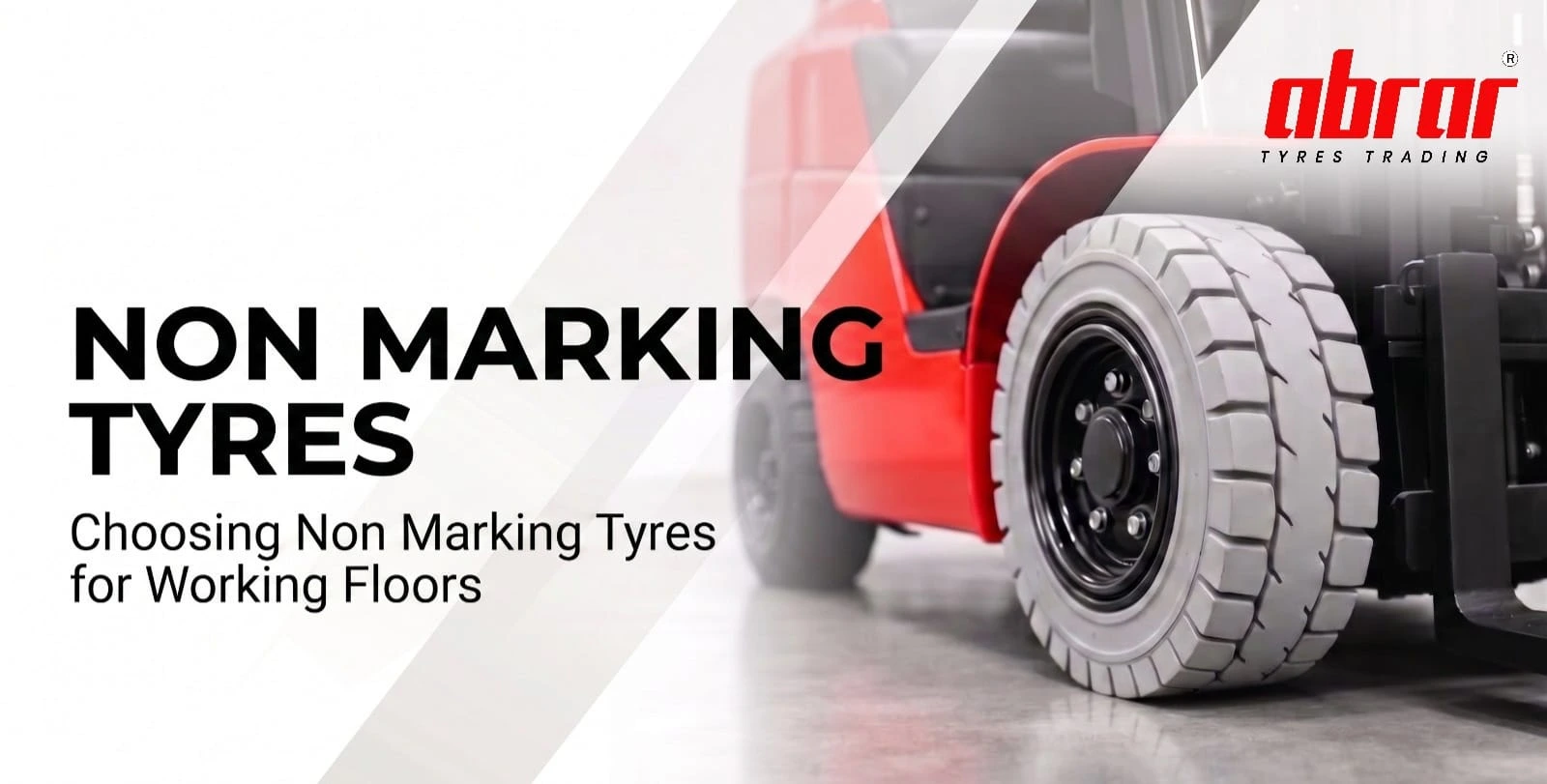
A black streak on a polished warehouse floor may look minor, but it creates a real operating cost. Cleaning takes time, customer-facing areas lose their finish, and safety markings can become harder to see. Non marking tyres are designed to prevent those dark rubber transfer marks while still delivering the load capacity, traction, and durability required by material-handling equipment.
For forklifts, reach trucks, pallet equipment, airport ground-support vehicles, and some industrial trailers, the right tyre is not simply about fitting the correct size. It must suit the floor, the load, the duty cycle, and the working environment. Choosing correctly helps keep facilities cleaner, equipment productive, and downtime under control.
What Makes a Tyre Non Marking?
Standard black tyres use carbon black in their rubber compound. Carbon black improves strength, heat resistance, and wear performance, but it is also the ingredient most likely to leave black scuff marks when the tyre turns sharply or operates on smooth flooring.
Non marking tyres use alternative reinforcing materials and compounds instead of carbon black. They are commonly gray, cream, white, or green, depending on the manufacturer and application. Their purpose is simple: reduce visible rubber marks on clean, light-colored, coated, or highly finished surfaces.
That does not mean every pale-colored tyre is automatically non marking. The product specification should clearly state that it is non marking. This matters when buying for a warehouse, food facility, hospital, retail space, airport terminal, or production area where floor appearance and hygiene standards are part of daily operations.
Where Non Marking Tyres Make the Most Sense
Non marking tyres are most valuable where black marks create cleaning costs, damage the appearance of a site, or conflict with operational requirements. Warehouses with epoxy-coated floors are a common example. The same applies to factories with clean production zones, beverage and food-handling facilities, pharmaceutical operations, exhibition halls, shopping centers, and indoor logistics areas.
They are also a practical choice for businesses that operate forklifts across both storage and customer-facing spaces. A distributor may move stock from a loading area into a showroom, while an airport operator may use ground equipment in areas where cleanliness is highly visible. In these situations, a marking tyre can create a problem well beyond the workshop floor.
For outdoor yards, rough concrete, construction sites, or high-heat applications, standard black tyres may still be the better value. The correct choice depends on the actual operating surface, not just the vehicle type.
Forklift Tyres Are the Most Common Application
Most demand for non marking compounds comes from forklift operations. Forklifts frequently make tight turns while carrying heavy loads, which is exactly when ordinary tyres can leave visible marks. Solid resilient forklift tyres are widely used because they resist punctures, carry heavy loads, and provide reliable service on hard indoor floors.
Non marking pneumatic and pneumatic-profile solid tyres are also available for applications that need more cushioning. This can be useful where the equipment moves between indoor floors and uneven loading areas, or where operator comfort is a higher priority.
The trade-off is important. A non marking compound may not always match the wear life or heat resistance of a premium black compound in the toughest applications. For a high-intensity operation with long travel distances, high loads, steep ramps, or hot ambient conditions, the tyre choice needs closer evaluation.
Choosing the Right Non Marking Tyres
Start with the equipment manufacturer’s approved tyre size and rim specification. Forklift tyre sizing can appear straightforward, but the wrong overall diameter, width, or rim fitment can affect stability, ground clearance, handling, and load performance. Never replace a solid tyre with a different construction or profile without confirming it is suitable for the machine.
Next, consider the load carried during normal work, not only the forklift’s maximum rated capacity. A truck that regularly moves dense pallets, paper rolls, metal products, or stacked materials places greater stress on tyres than one used for occasional light-duty picking. The load, lifting height, speed, turning frequency, and travel distance all influence tyre wear.
Floor condition deserves equal attention. Smooth concrete and epoxy floors generally suit non marking solid tyres well. Wet floors, ramps, dock plates, freezer areas, and uneven surfaces may require a tread pattern or compound with better grip. A tyre that keeps floors clean but loses traction when the surface is damp is not a good operational choice.
For many buyers, the decision comes down to three practical questions: What must the equipment carry? Where does it operate most of the time? How many hours does it work per shift? Clear answers make tyre selection faster and reduce the risk of paying for a product that does not match the job.
Solid, Pneumatic, or Press-On Band?
Non marking tyres are available in several constructions. Each has a different purpose.
Solid resilient tyres are a strong choice for forklifts operating on hard surfaces where puncture resistance and long service life matter. They are built in layers and provide dependable performance in warehouses, factories, and logistics centers. Their firm construction can transmit more vibration than pneumatic tyres, especially on uneven ground.
Pneumatic tyres contain air and provide better shock absorption. They can suit equipment that works on mixed surfaces, but they remain vulnerable to punctures unless a foam-filled solution is used. Foam filling removes the risk of a flat tyre, although it adds weight and changes ride characteristics.
Press-on band tyres are fitted to a steel band and are commonly used on smaller electric forklifts, reach trucks, and warehouse equipment. They are compact and effective on smooth indoor floors, but correct fitting is essential. A poor installation can damage the tyre, affect ride quality, and create unnecessary downtime.
Do Non Marking Tyres Wear Faster?
There is no single answer because tyre life depends heavily on the compound quality and working conditions. A high-quality non marking tyre used on clean indoor concrete may deliver excellent service life. On the other hand, abrasive surfaces, overloaded equipment, aggressive turning, excessive speed, and poor wheel alignment can wear any tyre quickly.
Compared with a similar black industrial tyre, some non marking compounds may have lower resistance to extreme heat or abrasion. This is why a black tyre is often preferred for harsh outdoor use, scrap yards, rough yards, and continuous heavy-duty work. The cleaner-floor benefit should be weighed against the environment and the total cost of ownership.
It is also worth checking whether marks are truly caused by the tyre compound. Dust, oil, loose rubber, damaged floor coatings, and incorrect inflation on pneumatic tyres can all worsen scuffing. A site inspection and equipment review can prevent the wrong diagnosis.
Installation and Maintenance Protect Your Investment
Even the best tyre will underperform if it is fitted incorrectly. Solid and press-on forklift tyres require professional equipment and trained fitting to ensure the tyre is seated correctly on the rim. Damaged rims, worn locking rings, incorrect band fitment, and unsuitable components can compromise safety.
Once installed, operators should inspect tyres regularly for chunking, cuts, flat spots, uneven wear, and separation. For pneumatic tyres, maintain the manufacturer-recommended pressure. Underinflation increases heat and sidewall stress, while overinflation can reduce traction and make the ride harsher.
Wheel alignment and steering condition also matter. If a forklift pulls to one side or shows rapid wear on one edge, replacing tyres alone will not solve the underlying issue. Correcting alignment and worn steering parts can extend tyre life and improve vehicle control.
Rotation may be appropriate for certain equipment and tyre setups, but it should follow the manufacturer’s recommendation. On forklifts, drive tyres and steer tyres often wear differently because they do different work. A practical maintenance plan should track operating hours, tyre condition, and replacement timing rather than waiting for a failure.
Get the Specification Right Before Ordering
When requesting a quotation, provide the tyre size, vehicle make and model, tyre construction, rim type, operating surface, and expected load or duty cycle. A photo of the sidewall and rim can help confirm the correct fitment, particularly for solid and press-on band tyres.
For fleet operators, standardizing tyre specifications across similar equipment can simplify purchasing and reduce unexpected fitment issues. It also makes it easier to monitor wear, plan replacements, and keep spare stock for critical machines.
Abrar Tyres can help match non marking forklift and industrial tyres to the equipment and conditions at your site, with professional fitting support for businesses that cannot afford unnecessary downtime. The right tyre should keep your floors presentable without compromising the traction, stability, and service life your operation relies on.
Clean floors are not only about appearance. They support safer movement, quicker housekeeping, and a more professional workplace. Select a non marking tyre based on the real demands of the job, then protect that choice with correct fitting and regular inspection.