Blog
How to Choose Forklift Tyres

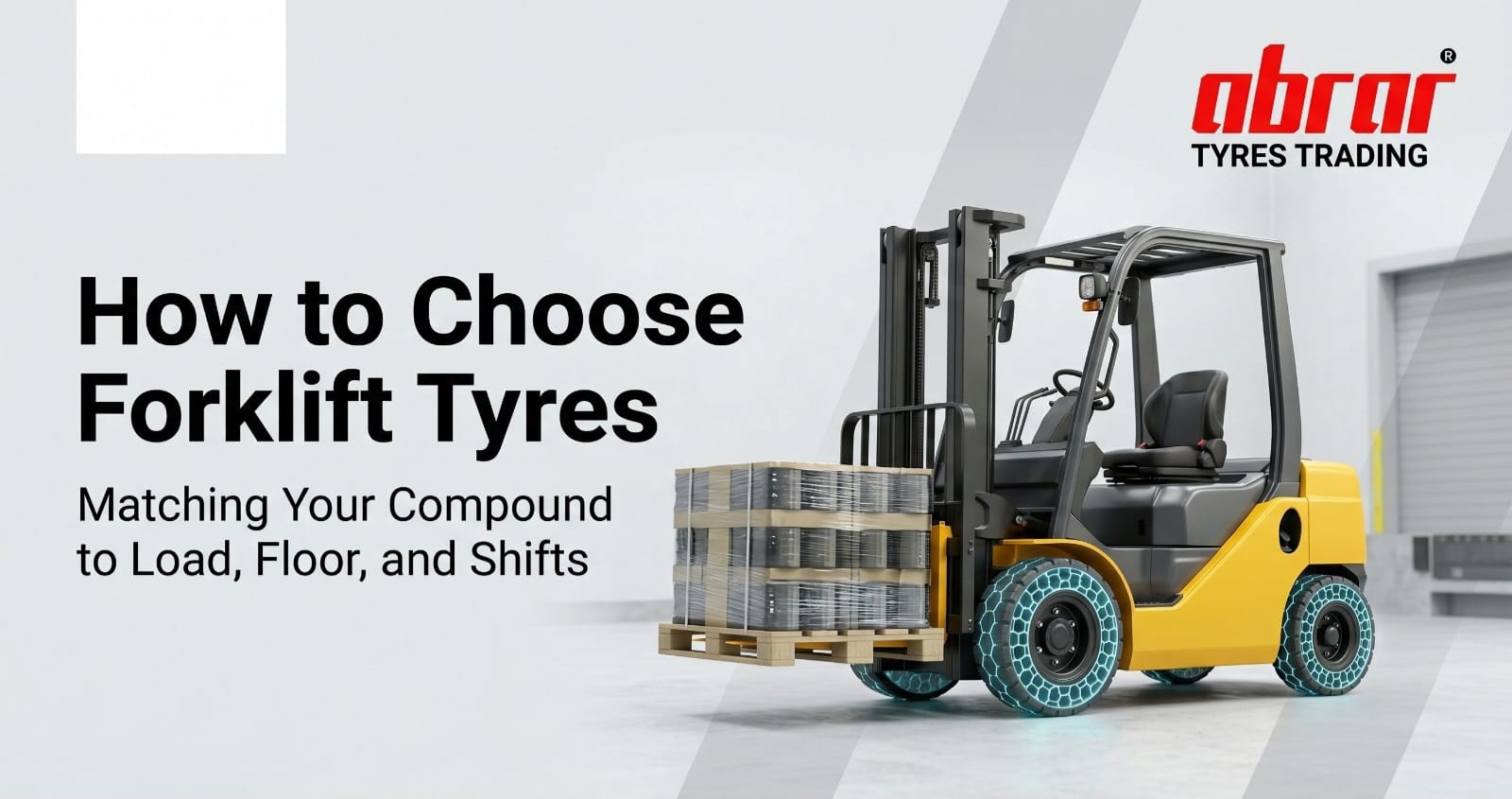
A forklift that keeps losing traction, wearing tyres too fast, or shaking under load usually has the wrong tyre setup – not just an old one. If you are figuring out how to choose forklift tyres, the real job is matching the tyre to your load, floor, shifts, and operating environment. Get that match right, and you improve safety, reduce downtime, and control replacement costs.
How to Choose Forklift Tyres Based on Real Use
Many buyers start with size, brand, or price. Those matter, but they should not come first. The better question is where the forklift works and what it does every day. A machine moving pallets indoors on smooth concrete needs something very different from a forklift working outdoors on rough yards, construction surfaces, or mixed conditions.
Forklift tyres affect more than movement. They influence stability, operator comfort, braking performance, floor protection, fuel or battery efficiency, and service intervals. That is why the cheapest tyre is rarely the lowest-cost option over time.
For most operations, the decision comes down to three main types: pneumatic, solid pneumatic, and cushion tyres. Each has strengths, and each has limits.
Pneumatic tyres
Pneumatic tyres are air-filled and built for outdoor use or uneven surfaces. They offer better shock absorption and a smoother ride over gravel, broken pavement, and rough yards. If your forklift works in a lumber yard, construction site, or open industrial area, pneumatic tyres are often the practical choice.
The trade-off is puncture risk. Nails, scrap metal, and debris can stop a shift fast. They also tend to flex more under load than solid options, which may not suit every high-intensity application.
Solid pneumatic tyres
Solid pneumatic tyres look similar to pneumatic tyres but are made from solid rubber. They are designed for operations that want the profile and durability of an outdoor tyre without the downtime that comes with flats. This makes them popular for ports, recycling yards, factories with mixed indoor-outdoor traffic, and demanding commercial sites.
They last longer in harsh conditions, but they ride harder than air-filled tyres. Operators may feel more vibration, especially on rough ground.
Cushion tyres
Cushion tyres are press-on tyres typically used on forklifts operating indoors on smooth warehouse floors. They have a smaller turning radius and are a strong fit for tight aisles, loading bays, and compact spaces. If your priority is maneuverability inside a controlled environment, cushion tyres are often the right answer.
Their limitation is surface condition. They are not built for rough terrain, broken asphalt, or outdoor debris-heavy work. Use them in the wrong setting and wear can accelerate quickly.
Start With the Surface, Not the Catalog
If you want a simple way to approach how to choose forklift tyres, start by looking down at the ground. The operating surface tells you a lot.
Smooth concrete floors usually favor cushion tyres or certain solid options, depending on the truck design. Rough concrete, ramps, and expansion joints may call for something more forgiving. Outdoor yards with gravel, potholes, or uneven patches typically need pneumatic or solid pneumatic tyres.
Surface conditions also affect tread choice. A deeper, more aggressive tread can help outdoors, especially in loose or wet conditions. On indoor floors, that same tread may wear unnecessarily fast or mark the surface. In some facilities, floor protection matters almost as much as tyre life, particularly where cleanliness and low marking are priorities.
Load Capacity Changes Everything
A forklift tyre is part of the load-handling system. It is not just a replaceable rubber part. The wrong tyre can affect stability, heat buildup, and wear patterns, especially when the truck runs near capacity for long hours.
Always match tyres to the forklift’s required load rating and actual operating load, not just occasional light-duty work. A truck that regularly lifts dense materials, stacked pallets, blocks, or industrial components places very different stress on its tyres than one moving lighter packaged goods.
This is where buyers sometimes make expensive mistakes. They choose a tyre that fits physically but is not ideal for the machine’s working load or duty cycle. The result can be faster wear, poor handling, and unnecessary replacement frequency.
If your operation includes heavy loads and long shifts, durability should carry more weight than upfront price. If your forklift use is lighter and more occasional, there may be more room to balance budget with performance.
Consider Hours, Shifts, and Heat Buildup
Two forklifts can use the same tyre size and still need different tyre constructions. Why? Because usage intensity matters.
A forklift running one short shift in a clean warehouse does not stress tyres the same way as a unit working multiple shifts in a busy industrial yard. Constant turning, braking, carrying, and heat buildup can shorten tyre life fast. High-duty operations usually benefit from stronger compounds and more durable tyre designs, even if the purchase price is higher.
Heat is a quiet cost driver. In demanding environments, tyres that are not suited to the workload can degrade early, chunk, crack, or wear unevenly. This is one reason expert fitment matters. The tyre has to match the machine, but it also has to match the pace of your operation.
Indoor, Outdoor, or Both?
Some of the hardest buying decisions happen in mixed-use environments. A forklift might start in a warehouse, move through a loading area, then spend time outside on yard surfaces. In that case, choosing purely for indoor comfort or purely for outdoor toughness may not work well.
This is where compromise becomes part of the decision. Solid pneumatic tyres are often a strong middle-ground option for businesses that need durability, puncture resistance, and reliable performance across changing surfaces. They may not deliver the softest ride, but they can reduce downtime and simplify maintenance.
If your forklift spends 80 percent of its time indoors and only occasionally goes outside, it may still make sense to prioritize indoor handling. If outdoor exposure is constant, choose for outdoor demand first. The harshest condition usually deserves the most attention.
How to Choose Forklift Tyres for Safety and Stability
Safety should never be treated as a side benefit. The right tyre supports predictable braking, stable cornering, proper mast control, and better operator confidence. Worn or mismatched tyres can increase the risk of slipping, reduced load stability, and handling issues during turns or lifting.
Tyre condition matters too. Even the best tyre choice will underperform if it is worn past its service limit, unevenly fitted, or installed incorrectly. Press-on and solid tyre fitment, in particular, should be handled with the right equipment and experience. Improper installation can create performance issues from day one.
For businesses managing multiple forklifts, standardizing the right tyre type across similar applications can also improve safety. Operators get more predictable behavior, and maintenance teams can manage replacements more efficiently.
Price Matters, but Cost Per Hour Matters More
It is reasonable to compare tyre prices. Every fleet and warehouse has a budget. But forklift tyres should be judged by operating cost, not just purchase cost.
A lower-priced tyre that wears out early, causes more downtime, or needs frequent replacement can end up costing more than a premium option that lasts longer and performs better. The same applies to puncture-prone environments, where an air-filled tyre may seem affordable until service interruptions start adding up.
A smarter buying question is this: how many productive hours will this tyre deliver in my actual operating conditions? That is the number that affects value.
This is also where working with an experienced supplier helps. A dependable tyre partner will not just sell what is in stock. They will ask about the forklift model, working surface, load profile, and usage pattern before recommending a fit.
Do Not Ignore Fitment and Maintenance Support
Even the right tyre can become the wrong solution if fitment is delayed or poorly done. Forklifts are uptime machines. When a tyre replacement turns into unnecessary downtime, the hidden cost can be bigger than the tyre itself.
Professional fitting matters most with solid and press-on applications, where proper tools and technique are essential. Ongoing checks also make a difference. Monitoring wear, spotting damage early, and rotating replacements at the right time can protect both tyres and equipment.
For businesses that run forklifts daily, it often makes sense to buy from a supplier that can handle both product supply and fitting support. That reduces friction when replacements are urgent. Companies such as Abrar Tyres support this kind of practical, service-led buying approach because the tyre is only part of the solution.
The Best Choice Is the One That Fits the Job
If you are still weighing options, keep it simple. Look at the surface, the load, the number of hours, and whether punctures or floor protection are bigger concerns. Those four factors will usually point you in the right direction faster than comparing brands alone.
The best forklift tyre is not the most expensive one or the one with the most aggressive spec sheet. It is the one that keeps your forklift stable, productive, and working with fewer interruptions. Choose for the job you actually have, and your tyres will start paying you back every shift.